Centuries before European ships reached the Atlantic coast, the tradition holds, seven prophets came to a nation of local people with a warning: a light-skinned people would arrive from across the sea, destruction would follow along the coast, and the nation would survive only if it moved west before that began.
The people listened, packed, and moved a civilization halfway across a continent. The record of what the prophets said is the Seven Fires Prophecy: the Anishinaabe account of seven eras, seven “fires,” in the life of the people known today as the Ojibwe, Odawa, and Potawatomi.
The tradition reads the first six fires as already passed: a migration, a meeting, a long unraveling. The seventh is the one it places in the now, the time we are living. That fire is addressed to whoever is alive when the signs appear, and the signs it names are poisoned waters, failing forests, and air that loses its power to give life.
Taken as a sequence, the prophecy divides the people’s story into three movements, and the first carries a warning, not just a route.
The First Fire told the people to leave the ocean or face destruction.
The instruction to travel west was, in the tradition’s own reading, an evacuation order given five centuries early. “The food that grows on water” was the sign the journey was over: wild rice, a food that could feed a nation, growing in a homeland far enough west to stand outside the first wave of what was coming.
That place was the western Great Lakes. Manoomin, the food the prophets named, is the Anishinaabe word for North American wild rice, a native grass whose seed ripens above shallow water, thick in the bays and rivers of what is now northern Wisconsin and Minnesota.
And the whole nation made the move, a journey of some five hundred years by the tradition’s count, up the St. Lawrence, past the falls at Niagara and the river at Detroit, island by island through the lakes to Lake Superior, where it stayed. The island of Mooningwanekaaning, today called Madeline Island, became the capital of the Anishinaabeg nation, and the Ojibwe live in that country still.
The telling makes the stakes concrete through the group that chose to stay. The People of the Dawn, the Abenaki, remained by the sea to keep the eastern fire, and were among the first caught in the suffering the light-skinned people brought: villages destroyed, families scattered.
Within the tradition, that contrast is the prophecy’s proof: the people who followed the megis west were carried out of the path of destruction before it arrived.
The Fourth Fire is the hinge. Two prophets who came as one foretold the arrival of the light-skinned people and gave a test for reading their intent: if they came in brotherhood, new knowledge would join with old knowledge; if the rivers ran poisoned and the fish grew unfit to eat, the face they wore was greed.
The Fifth and Sixth Fires describe the cost of that contact as the tradition tells it: a promise of salvation accepted and found false, children removed from the teaching of the elders, the circle of the nation broken.
The circulated telling identifies the mission era and the boarding schools here; I grade that as the tradition’s own interpretive reading of its documented history.
The Seventh Fire is the one addressed to the living today.
Its setting, as the seventh prophet described it, is ecological: waters so poisoned that the plants and animals in them sicken and die, forests and prairies gone, air losing its power to give life. In that time, the tradition holds, a New People will emerge and take up a work of recovery.
The task has concrete parts: retrace the trail and gather what earlier generations left along it, recover the lost stories, ask the elders for guidance while elders remain who can still give it, and return to the Original Instructions, the first teachings on how to live in balance.
The point of the task is to relight the sacred fire, because only a lit fire makes the final choice possible. That choice, the telling says, belongs to the light-skinned people, and it states both outcomes without softening either. If they choose the right path, the Seventh Fire lights an Eighth, a final fire of brotherhood and sisterhood among all peoples.
If they remain on the path of the mind alone, the destruction they carried with them returns to destroy them, and the suffering and death fall not on them alone but on all the people of the earth.
Taken together, the sequence works less as a forecast than as an instruction: within the tradition, the Seventh Fire is not a date to wait for but work assigned to whoever is alive when the signs appear.
Where the Prophecy comes from
This is an oral tradition, and it behaves the way a family recipe does: passed hand to hand, written down late, each telling slightly different, but the dish is still recognizable. The earliest written record I can point to is documented: William Warren, himself Ojibwe, recorded the megis and the westward migration from Ojibwe oral historians in the early 1850s.
The megis is the sea shell that, in the tradition, rose from the water to mark each stage of the journey. The keepers of the tradition were the Midewiwin, the Anishinaabe medicine society, whose birch-bark scrolls (migration charts among them) Selwyn Dewdney documented in his 1975 study. The Seven Fires as a numbered sequence of prophets is attested most fully in Edward Benton-Banai‘s The Mishomis Book (1988), which remains the standard published telling.
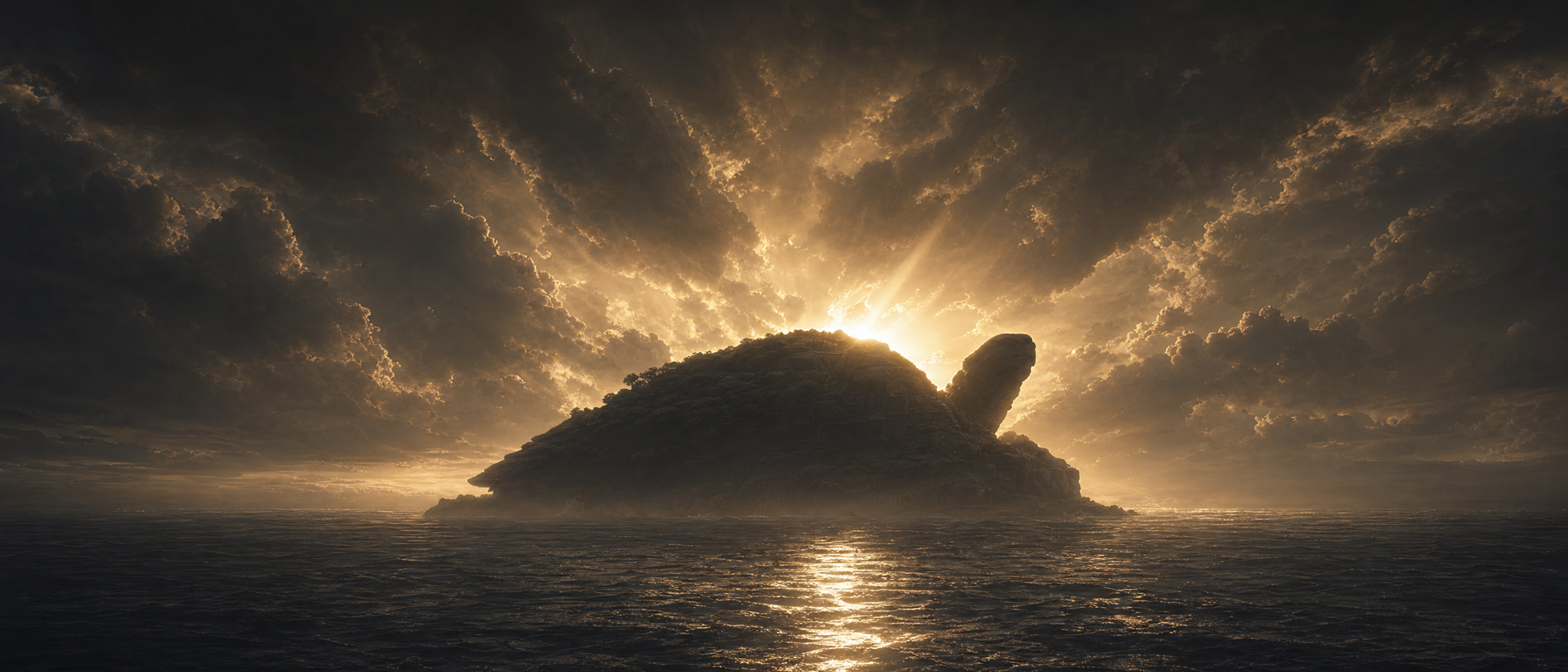
This version that you can download as a PDF circulates from 7fires.org; its narrator writes of Abenaki descent and folds family history into the telling. It follows the journey through named places: the turtle-shaped island near Montreal, the falls the people called the place of thundering water, the river cut like a knife, and the island of Mooningwanekaaning, where the rice was found.
Those stopping places are attested in the published tellings, and the migration itself is documented in Warren. Readings that place the present day in the Seventh Fire are interpretive — the tradition’s own teachers make that reading, and I report it as their testimony, not as a mechanism of history.
Sources
- William W. Warren, History of the Ojibway People — written 1852–53, published by the Minnesota Historical Society, 1885. Documented (recorded from Ojibwe oral historians).
- Selwyn Dewdney, The Sacred Scrolls of the Southern Ojibway — University of Toronto Press, 1975. Documented (the Midewiwin scrolls and migration charts).
- Edward Benton-Banai, The Mishomis Book: The Voice of the Ojibway — 1988; University of Minnesota Press edition, 2010. Attested (the standard published telling of the Seven Fires).
- “The Prophecy of the Seven Fires of the Anishinaabe” — circulated text credited to 7fires.org. Attested (a circulated telling; the immediate source of this page).
…But even if you find all the answers in every rabbit hole, what are you going to do about it?